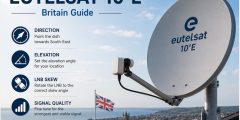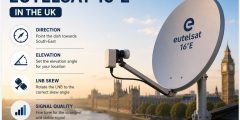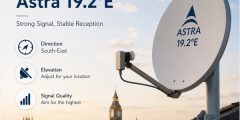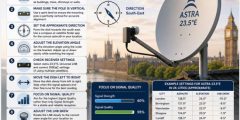


Satellite tv continues to provide viewers with access to a diverse collection of channels and airing services from around the world. Behind this wide selection is a technical system that depends on carefully configured transmission and receiving parameters.
From time to time, broadcasters may introduce changes that affect the way a channel is received. These changes can leave an old frequency configuration unable to locate the transmit, making it necessary to perform a new search using updated information.
For viewers who are unfamiliar with device settings, this situation can initially seem complicated. In reality, the process often becomes much easier once the main parameters are understood and entered correctly into the appropriate sections of the device.
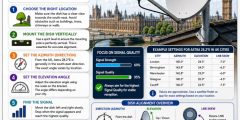
Signal clarity is another factor that deserves attention. Even when the transmission information is accurate, a poorly aligned antenna or a problem with the receiving equipment may prevent the channel from appearing or may cause interruptions during viewing.
Regularly reviewing the channel menu can also help users discover newly added services and remove outdated entries. This keeps the device organized and makes it easier to find frequently watched channels without having to search through an unnecessarily long menu.
Reliable satellite reception is therefore the result of several elements working together rather than depending on one setting alone. Correct transmission information, suitable equipment, proper configuration, and careful device configuration all contribute to a better viewing experience.
In the following article, we take a closer look at the world of satellite airing and provide useful guidance for channel tuning, frequency updates, transmission-related problems, and device configuration, with the aim of making the information sharp and practical for every audience.
In the world of satellite airing, the concepts of beams and range are among the most important factors that determine transmission clarity and channel reception. Understanding these two concepts helps users choose the right satellite and properly align their antenna to achieve a steady and sharp picture.
First: The Meaning of Beams
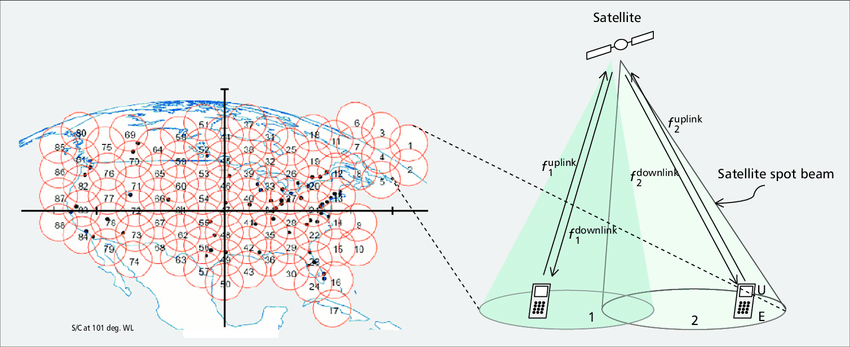
Satellite beams refer to the way a satellite transmits signals to specific regions on Earth. They can be compared to a flashlight that directs light toward a particular area instead of illuminating everything equally.
Each satellite usually has multiple beams, such as:
- A range covering the Middle East
- A range covering North Africa
- A range covering EU region or other regions
Each range varies in strength and range area depending on its purpose.
Second: The Meaning of Coverage
Coverage refers to the geographical area where a satellite transmission can be received with good clarity. In other words, it is the range over which the transmission is effectively transmitted on Earth.
Coverage varies from one satellite to another:
- Some satellites cover only specific countries
- Others cover entire continents
- Some beams are precisely focused on certain regions
The closer you are to the center of the range area, the stronger and more steady the transmission will be.
Third: The Relationship Between Beams and Coverage
Beams are the mechanism used to define range areas. Each range creates its own specific “range zone.”
If the range is strong and focused:
- Coverage is stronger in a specific area
- Signal becomes weaker outside that area
If the range is wide:
- It covers a larger geographical area
- But the transmission may be weaker compared to focused beams
Fourth: The Impact of Beams and Coverage on Signal Strength
Signal strength received by a satellite antenna depends directly on your location within the range area and the type of range used.
If you are in the center of range:
- The transmission is very strong
- Smaller dishes can be used
- Picture clarity is steady (HD and 4K without interruption)
If you are at the edge of range:
- Signal strength gradually weakens
- A larger antenna is required
- Signal interruptions may occur, especially during bad weather
If you are outside the range area:
- The satellite may not be received at all
- Or the transmission may be extremely weak and unstable
Fifth: Why Signal Strength Differs Between Regions
There are several factors that affect transmission strength within beams:
- The satellite’s design and technology
- Transmission power of the satellite
- Distance between the satellite and the region
- Natural obstacles such as mountains or structures
- Size and accuracy of the receiving antenna
Sixth: Importance of Understanding Beams and Coverage
Understanding these concepts helps users to:
- Choose the right satellite for their region
- Determine the correct antenna size
- Understand why some channels are stronger or weaker
- Improve transmission positioning and configuration clarity
Connecting Your Receiver to the Internet for Live Streaming
- Connect the device through Wi-Fi or Ethernet if internet connectivity is supported.
- Use a steady broadband connection to reduce buffering during live streaming.
- Keep the device software updated to improve compatibility with online services.
- Use only official streaming applications and services available on your device.