
Watching television through a satellite receiver may appear to be a simple process, yet the technology behind every available channel involves a number of technical settings. When these settings change, viewers may need to update their equipment before a channel can be received normally again.
Frequency information provides the starting point for identifying a particular broadcast. By using the appropriate transmission details, the receiver can search within the correct signal range instead of scanning blindly through all available options.
However, entering the correct information does not always guarantee perfect reception. The strength and quality of the incoming signal can be influenced by the dish position, obstacles around the installation, weather conditions, cables, connectors, and the performance of the receiving equipment.
Another important aspect is the way channels are searched and stored. Depending on the receiver, users may choose between automatic and manual scanning, with manual tuning often offering more control when searching for a particular service.
Understanding these basic principles can save time and make it easier to identify the reason behind missing channels or unstable reception. Instead of changing several settings at random, users can approach the problem step by step and check each possible factor.
Our goal in this article is to provide clear and useful information covering the main elements of satellite reception and channel tuning, allowing readers to deal with frequency updates and technical issues in a more practical and informed way.
Today, it is possible to receive signals from multiple satellites using just one satellite antenna. This approach saves users a lot of time, effort, and configuration costs. It is widely used by satellite TV enthusiasts, as it allows access to channels from various satellites such as Nilesat, Arabsat, and Hot Bird without the require to setup multiple dishes. In this article, we explain how this technique works, how it is applied, and the main equipment used.
First: The Idea of Receiving Multiple Satellites
The concept of receiving multiple satellites relies on positioning a single antenna in a way that allows it to capture signals from various orbital positions in the sky. This is achieved by using multiple receiving heads (LNBs) on the same antenna, with each LNB directed toward a various satellite.
For example, one LNB can be aimed at Nilesat, another at Arabsat, and a third at Hot Bird, while the main antenna remains fixed in a central position.
Second: Required Equipment
To receive multiple satellites on a single antenna, several basic components are needed:
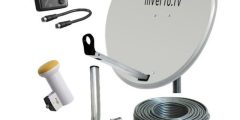
- One satellite antenna of suitable size (usually slightly larger than standard)
- Multiple LNB units depending on the number of satellites
- Multi-LNB holder for mounting the LNBs
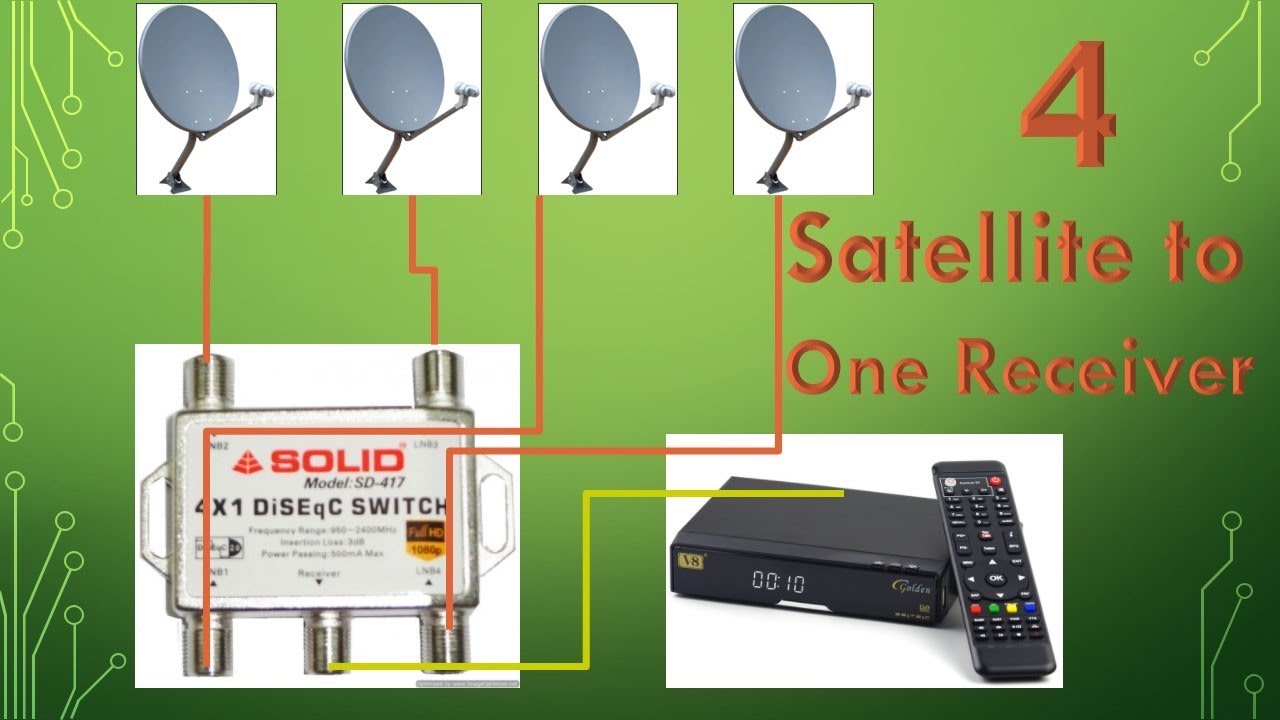
- DiSEqC switch for transmission management and switching
- A satellite device that supports multi-satellite switching
Third: Installation Method
The configuration process involves several important steps:
- Selecting the main satellite: The antenna is first aligned to the strongest or most commonly used satellite in the region, such as Nilesat.
- Installing the main LNB: It is carefully adjusted to receive the best possible transmission.
- Adding additional LNBs: Extra LNBs are mounted beside the main one, each pointing to a various satellite.
- Fine-tuning the angles: Each satellite has a various orbital position, so precise adjustment is required to achieve strong transmission clarity.
- Connecting the DiSEqC switch: All LNBs are connected to the switch, which is then linked to the device.
- Configuring the device: Satellite settings are entered, and each LNB is assigned to the correct port in the system.
Fourth: Satellites That Can Be Combined
The ability to combine satellites depends on the geographical location, but in most Arab regions, users can typically receive:
- Nilesat
- Arabsat
- Hot Bird
- Astra (in some areas)
The closer the orbital positions of the satellites, the easier it is to combine them on a single antenna.
Fifth: Advantages of Receiving Multiple Satellites
- Lower configuration cost compared to using multiple dishes
- Easy switching between channels from various satellites
- Wide variety of content (Arabic, European, and international channels)
- Reduced space required for configuration
Sixth: Challenges and Difficulties
Despite its advantages, this system has some challenges:
- Requires precise positioning and technical accuracy
- Some edge satellites may have weaker transmission strength
- Weather conditions can affect transmission clarity
- Professional configuration is often recommended for best results
Seventh: Tips for Better Performance
- Use a high-clarity and appropriately sized antenna
- Choose reliable, high-performance LNBs
- Ensure the antenna is firmly mounted to withstand wind
- Use a high-clarity DiSEqC switch
- Carefully adjust each satellite individually for best transmission
Best Receivers for Watching Encrypted Channels
- Choose a receiver that officially supports the access system used by your authorized provider.
- Check compatibility with smart cards, conditional access modules, or approved services.
- Strong hardware and stable firmware can help provide smoother authorized viewing.
- Always use legitimate subscriptions and equipment supported by the channel provider.