
Every satellite broadcast follows a specific technical configuration that enables compatible receivers to identify and display its content. When those parameters are changed, the receiver may continue searching with outdated information and fail to locate the desired channel.
Updating the receiver is therefore an important part of maintaining an accurate channel list. The process becomes even more effective when users understand how signal quality, dish positioning, and equipment settings can influence the outcome of a channel scan.
In the following article, we explore these aspects from a practical perspective and provide useful information for viewers who want to keep their satellite systems properly configured. The focus is on making channel tuning and reception troubleshooting simpler and more accessible.
The Hot Bird 13° East satellite is one of the most popular satellite positions available to viewers in the United Kingdom. It carries a wide range of international tv and radio channels. With the right antenna size and accurate positioning, it is possible to receive a strong and steady Hot Bird transmission across many parts of the UK.
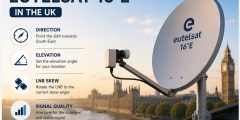
In this guide, we explain how to align a satellite antenna to Hot Bird 13°E in Britain, including the key steps for setting the antenna direction, elevation angle and LNB skew.
Equipment Needed Before Aligning the Dish
Before starting the positioning process, make sure you have the necessary equipment:
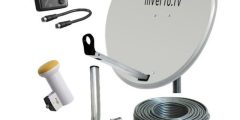
- A satellite antenna of a suitable size.
- A good-clarity LNB.
- A satellite device.
- High-clarity coaxial wire.
- A satellite finder, if available.
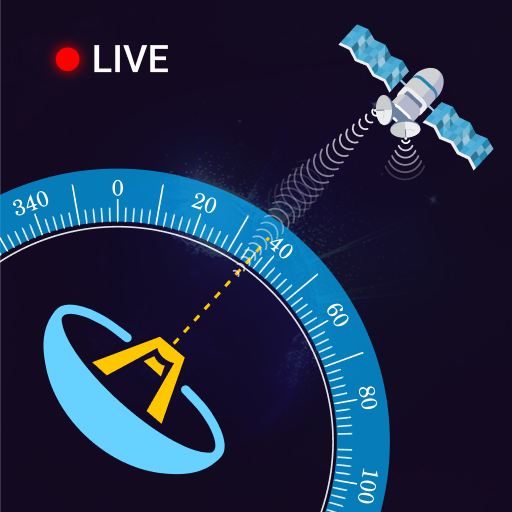
- A compass or satellite positioning app.
- The required tools for mounting and tightening the antenna.
It is also important to make sure that the antenna mounting pole is perfectly vertical. Even a small tilt in the pole can affect the accuracy of the elevation and positioning settings.
Choose the Right Location for the Satellite Dish
To receive a strong Hot Bird transmission, the antenna must have a sharp line of sight toward the satellite.
Avoid installing the antenna where the transmission path is blocked by:
- Tall structures.
- Trees.
- Chimneys.
- Walls.
- Towers or metal structures.
You should also remember that small trees may become larger obstacles over time as their branches grow.
Which Direction Should a Hot Bird Dish Face in the UK?
Hot Bird is located at the orbital position of 13° East, so a satellite antenna in the UK generally needs to face toward the south-east.
However, you should not rely only on the general south-east direction, as the exact antenna positioning changes depending on your location in the United Kingdom.
For example, the azimuth and elevation settings will vary slightly between cities such as:
- London.
- Manchester.
- Birmingham.
- Liverpool.
- Glasgow.
- Edinburgh.
- Cardiff.
For this reason, it is recommended to use a satellite positioning calculator or a dedicated satellite finder app to obtain the exact settings for your configuration location.
How to Set the Hot Bird Dish Elevation Angle
After determining the approximate direction, the next step is setting the elevation angle.
The elevation angle determines how far the satellite antenna should be tilted upward or downward toward the satellite.
Because the elevation angle varies from one part of the UK to another, you should avoid copying the exact settings from a antenna installed in a various city.
Start by setting the elevation approximately, then slowly move the antenna while monitoring the transmission on your satellite device or satellite finder.
Adjusting the Dish from Left to Right
Once the approximate elevation has been set, slowly move the antenna horizontally from left to right.
This step requires patience because moving the antenna too quickly may cause you to pass the satellite position without noticing a transmission.
When a transmission appears:
- Stop moving the antenna.
- Check the transmission strength and clarity.
- Make very small adjustments.
- Find the position that provides the highest transmission clarity.
- Gradually tighten the mounting bolts.
It is recommended to focus more on transmission clarity than transmission strength, because a strong transmission does not always mean that the antenna is pointing at the correct satellite.
How to Adjust the LNB Skew
The LNB skew, or LNB rotation angle, is important for achieving the best possible transmission clarity.
After finding the Hot Bird transmission, slowly rotate the LNB inside its holder while monitoring the transmission clarity on the device.
Even a very small adjustment can sometimes improve the transmission significantly.
Once you find the best position, tighten the LNB holder securely to prevent it from moving in strong winds.
Use an Active Hot Bird Transponder to Find the Satellite
Before moving the antenna, it is useful to add an active Hot Bird transponder to your device and open the transmission information screen.
For a manual search, you can generally select:
- Satellite: Hot Bird 13°E
- LNB Type: Universal
- Monitor the transmission clarity while adjusting the antenna.
Using a known Hot Bird transponder can help confirm that you have found the correct satellite and prevent confusion with nearby satellite positions.
How to Confirm That You Have Found the Correct Hot Bird Satellite
When a strong transmission appears, do not immediately assume that you have found Hot Bird.
Perform a channel search and check the services that have been detected.
If the device finds the expected channels and services transmit from Hot Bird, the positioning was successful.
If completely various channels appear, the antenna may be pointing at a nearby satellite instead.
For this reason, it is always better to use a reliable and active transponder when searching for the satellite.
What Dish Size Is Best for Hot Bird Reception in the UK?
The ideal satellite antenna size depends on your city, region and local reception conditions.
In many parts of England, Hot Bird can be received with a medium-sized satellite antenna when the antenna has a sharp line of sight and is accurately aligned.
In areas with weaker reception or more difficult weather conditions, a larger antenna may provide a better transmission margin and improved stability.
However, a larger antenna alone does not guarantee better reception. Accurate positioning, a good-clarity LNB and a properly installed wire are also important.
Can You Use an Old Sky Dish to Receive Hot Bird?
Many viewers in the UK ask whether an old Sky satellite antenna can be used to receive Hot Bird.
The answer depends on the type and size of the antenna, the configuration location and the LNB being used.
In some cases, the antenna may be suitable, but you may require to:
- Replace the LNB.
- Change the LNB holder.
- Completely realign the antenna.
- Use a suitable unencrypted satellite device.
- Upgrade the wire or connectors.
An old Sky antenna is normally aligned toward a various satellite position, so it must be accurately repositioned to receive Hot Bird at 13° East.
How to Fix No Signal Problems on Hot Bird
If you cannot find a Hot Bird transmission, check the following points:
- Make sure the satellite wire is correctly connected to the device.
- Inspect the LNB for damage, corrosion or water ingress.
- Check the wire for cuts or damage.
- Confirm that the correct LNB settings are selected in the device.
- Check the transponder being used for the transmission search.
- Make sure there are no structures or trees blocking the antenna.
- Move the antenna very slowly during positioning.
- Recheck the elevation angle.
- Adjust the LNB skew.
- Make sure the mounting pole is perfectly vertical.
In some cases, the main problem is simply that the wrong satellite has been found. For this reason, do not rely only on transmission strength. Always check the transmission clarity and confirm the satellite by scanning for the correct channels.
Tips for Getting a Strong and Stable Hot Bird Signal
For the best possible reception, follow these tips:
- Use a antenna size suitable for your location.
- Make sure the antenna mount is firmly secured.
- Use a good-clarity LNB.
- Install high-clarity satellite wire.
- Avoid unnecessary wire joins.
- Adjust the antenna slowly and carefully.
- Focus on transmission clarity.
- Set the LNB skew accurately.
- Keep the transmission path sharp of obstacles.
- Recheck the transmission after tightening all mounting bolts.
Can You Receive Hot Bird and Astra with One Satellite Dish?
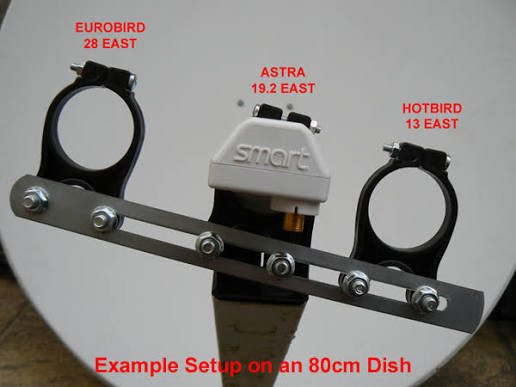
Yes, in some cases it is possible to receive more than one satellite position using a single antenna. This can be done by installing multiple LNBs or using a suitable Monoblock LNB.
Receiving both Hot Bird 13° East and Astra 19.2° East is a popular multi-satellite setup in EU region because the orbital distance between the two positions is relatively small.
However, successful reception depends on:
- Dish size.
- Accurate antenna positioning.
- The type of LNB holder.
- The type of LNB being used.
- DiSEqC settings on the device.
It is recommended to align the main satellite accurately first, then add the second satellite after confirming that the primary transmission is steady.
Understanding Wavelengths and Types of Satellite Broadcasting
- Satellite television uses different frequency bands to transmit signals between satellites and ground equipment.
- Ku-band is widely used for direct-to-home television services in many regions.
- C-band can provide reliable coverage but generally requires larger receiving dishes.
- Understanding frequency characteristics helps when selecting compatible satellite equipment.